Self-Locking Reusable Humane Mouse Trap
Couldn't load pickup availability
- SECURE CHECKOUT
- 30 DAY MONEY BACK GUARANTEE
- HERE TO HELP
Self-Locking Reusable Humane Mouse Trap
Keep your home and garden free from rodents with this reusable mouse trap designed for safe and effective use. Made from high quality ABS transparent plastic, this trap allows easy monitoring while ensuring durability. Unlike harmful glue or poison, this mice trap offers a clean and eco friendly solution for rodent control.

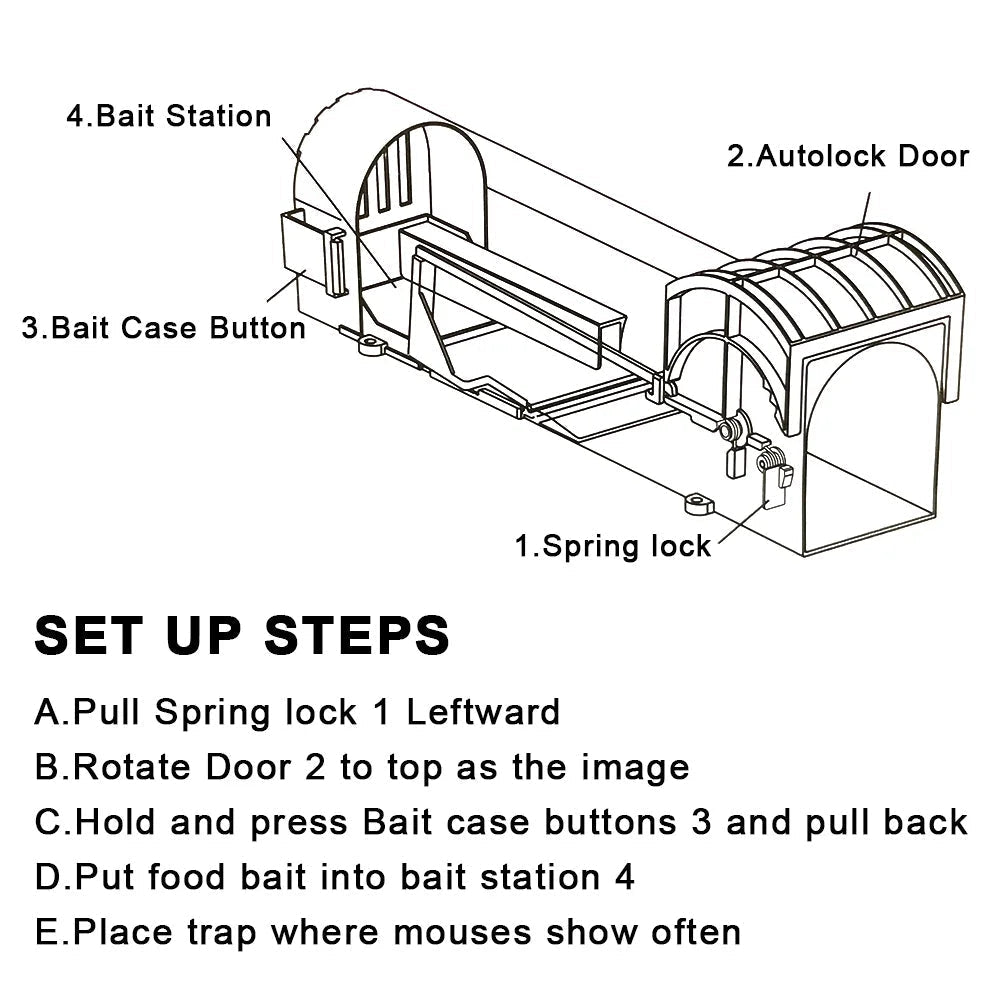
The sturdy metal door ensures rodents cannot bite through, making it a long lasting rat trap. With its self locking mechanism, once the rodent enters, the trap closes securely without causing harm. This provides peace of mind knowing you can handle pests in a safe and controlled way.
As a humane mouse trap, it is designed to catch rather than kill. It provides plentiful ventilation to reduce stress for the captured animal, making it more compassionate compared to traditional traps. This thoughtful design makes it ideal for households looking for an effective yet humane solution.
Lightweight, portable, and reusable, this mouse trap is suitable for indoor areas like kitchens and basements, as well as outdoor spaces such as gardens or garages. Practical and safe, it is a must have tool for maintaining a rodent free environment.
- Durable reusable mouse trap made with high quality ABS transparent plastic
- Secure metal door design ensures rodents cannot bite through the trap
- Mice trap with self locking mechanism for safe and reliable use
- Provides plentiful ventilation, making it a humane mouse trap
- Suitable for both indoor and outdoor use in homes, gardens, and garages
- Eco friendly alternative to glue boards or poison, making it a safe rat trap option

Specifications:
- Material: ABS, Metal
- Size: 2.36x3.74x12.59in
What's Included:
- 1 x Mouse Trap
Frequently Asked Questions:
Is this a humane mouse trap?
Yes, it is designed to catch mice safely without harming them.
Can this rat trap be used outdoors?
Yes, it is made from durable ABS plastic and a sturdy metal door, making it suitable for both indoor and outdoor use.
How many times can I reuse this mice trap?
This trap is designed with high quality materials, so it can be reused many times. Its transparent body allows you to monitor activity easily, while the metal door ensures lasting durability.
Shipping & Tax Policy
- Free shipping on every order; no minimum spend.
- Handling: 1–2 business days (Tuesday–Saturday). Cut-off: 5:00 PM EST.
- Transit: 3–5 calendar days, Monday–Sunday.
- Total delivery: 4–7 business days; peak periods may take longer.
- Tracking is emailed after dispatch; contact us if missing after 3 business days.
- Applicable sales taxes are calculated at checkout using your shipping address.
- Shipping policy · Payment & tax details.
Return & Refund Policy
- Return eligible items within 30 days of delivery.
- Unworn, unwashed, original condition and tags; original packaging wherever possible.
- Hygiene exclusions, Final Sale and worn or altered items are not returnable.
- Email contact@anniesfashion.shop with your order number and reason; instructions within 1–2 business days.
- Use tracked shipping to our Cleveland return address listed in the full policy.
- Refunds: original payment method within 10 business days after receipt and inspection; allow extra bank processing time.
- Report damaged, defective or wrong items within 48 hours for a free return and replacement or full refund. Full return policy.
30 Days Money Back Guarantee
- Eligible purchases can be returned within 30 days of delivery.
- Your tracking delivery date starts the 30-day return period.
- Items must be unworn, unwashed and in original condition with tags attached.
- Include original packaging wherever possible; hygiene and Final Sale exclusions apply.
- Email contact@anniesfashion.shop with your order number and reason to begin.
- Refunds follow receipt and inspection: original payment method, within 10 business days; banks may take longer.
- Full guarantee conditions and return instructions.
Self-Locking Reusable Humane Mouse...

- 5 stars: 34 (100%)
- 4 stars: 0 (0%)
- 3 stars: 0 (0%)
- 2 stars: 0 (0%)
- 1 star: 0 (0%)
I prefer exploring pest-control options that avoid poisons and adhesives when a practical alternative is available. This reusable live-capture trap seemed interesting because it combines transparent housing with ventilation and a secure metal door. I imagined preparing a suitable location, inspecting the mechanism, and checking the device frequently instead of leaving it unattended. Any captured animal would need prompt and appropriate handling, and I would follow local guidance rather than assuming relocation is always the correct choice. The ability to clean and reuse the trap is appealing, but the main attraction is having a more deliberate option for managing occasional rodent problems.
I prefer avoiding poison where possible because it can introduce additional hazards for other animals and the surrounding environment. This mechanical live-capture trap seemed like an option worth considering. I imagined using it in a suitable location, monitoring it closely, and following local animal-welfare guidance if a mouse was caught. The transparent housing would make inspection easier, and the reusable design could support repeated use after proper cleaning. I still believe exclusion and removing food sources are the most important long-term measures. The trap appeals to me as a potential supplement rather than a complete solution on its own.
The thought of repeatedly opening a trap just to find out whether something is inside doesn't appeal to me. This transparent model seemed much more convenient for regular inspections. I imagined checking the enclosure visually throughout the day while keeping it safely positioned away from children and pets. If an animal was caught, I would want to handle the situation promptly and follow appropriate local guidance. The clear housing is a simple design choice, but it seems particularly important for a live-capture device. I appreciate features that encourage responsible monitoring rather than making the trap difficult to inspect.
I appreciate when a product's design reflects the specific job it's intended to perform. This live-capture trap includes a visible enclosure, ventilation openings, and a door meant to remain closed after activation. I imagined inspecting these features carefully before using it and checking the trap frequently once it was set. The reusable construction also seems sensible because the housing could be cleaned according to proper hygiene procedures. I wouldn't assume that every capture or release would be safe simply because the trap is described as humane. The responsible handling process matters just as much as the equipment itself.
I prefer avoiding rodent poison when possible, particularly in areas where household supplies are stored. This reusable live-capture trap seemed like a different option because it relies on a mechanical door rather than toxic bait. I imagined choosing an appropriate placement, using a suitable attractant, and inspecting the device frequently. I would still need to address the entry points and food sources that brought mice inside, but the poison-free approach is what appealed to me. I appreciate pest-control equipment that can be incorporated into a broader prevention plan without adding chemical rodenticides to the environment.
I appreciate household tools that can be maintained properly instead of discarded after use. This mouse trap seemed appealing because it combines a washable enclosure with a mechanical door intended for repeated operation. I imagined inspecting and cleaning it according to appropriate hygiene guidance after any capture, then storing it safely until required again. Rodents can carry infectious material, so protective handling would be important. The reusable design is attractive, but what interests me most is having a dedicated piece of equipment rather than improvising a solution. It fits my preference for organized household maintenance and thoughtful prevention.
I prefer using equipment made for a specific task rather than creating improvised traps from household objects. This reusable mouse trap seemed like a dedicated option for live capture, with a clear enclosure and self-locking door. I imagined researching proper placement and handling before using it, then inspecting it frequently throughout the active period. The metal door is a practical detail because secure containment matters. I also like that the device could be cleaned and stored afterward. Of course, a trap alone wouldn't address the reasons mice entered the house, so I would combine it with better exclusion and storage.
I keep gardening supplies in a storage area where rodents might occasionally investigate bags or containers. A reusable live-capture trap seemed like one possible option for addressing that problem. I imagined first securing any food or seeds, then placing the trap in an appropriate sheltered position and checking it frequently. The clear enclosure and secure door are useful details for monitoring. I particularly appreciate that the device is intended to be reused rather than discarded after an incident. Of course, sealing entry points and improving storage would remain important for preventing the same problem from returning.
I was interested in this design because it includes ventilation openings for an animal held temporarily inside. That seems like an important consideration for any trap marketed as live capture. I imagined checking the device frequently and responding promptly if something was caught, rather than assuming ventilation made prolonged confinement acceptable. The transparent housing would also help with monitoring without unnecessary disturbance. I appreciate that the product considers airflow alongside the locking mechanism. For me, humane pest control involves the entire process, from careful placement to prompt handling and appropriate next steps, not simply whether the trap avoids a lethal mechanism.
I would want to understand where rodents were traveling before choosing a trap location. This lightweight device seemed convenient because it could be positioned along an appropriate route after checking for signs of activity. I imagined using the transparent housing to monitor it frequently and responding promptly to any capture. The self-locking metal door gives the design a clear mechanical purpose, while the reusable construction is appealing for careful maintenance. I also appreciate that the trap could be stored after the entry problem was fixed. The main value is having an organized approach instead of reacting without a plan.
Basements can sometimes provide entry points for mice, especially when storage areas become cluttered. This trap seemed like a possible tool to include in a broader inspection and prevention plan. I imagined checking for gaps, improving storage conditions, and placing the enclosure where activity had been observed. The transparent housing would make frequent checks easier, while the locking door is intended to contain a captured animal. I appreciate that the device can be moved and reused when appropriate. It seems most useful when treated as a carefully monitored tool rather than a substitute for fixing the conditions that attract rodents.
I prefer pest-control equipment that allows me to understand what's happening without unnecessary contact. The transparent enclosure on this trap seemed particularly useful for that reason. I imagined checking it frequently from the outside and making sure the locking door remained secure. The ventilation openings are an important feature for temporary live containment, although they don't make prolonged confinement acceptable. I also appreciate that the unit can be reused after suitable cleaning and inspection. The design appeals to me as a practical option for someone willing to take the monitoring and animal-welfare responsibilities seriously.
I dislike the thought of using traditional lethal traps when dealing with mice around a home. This live-capture design caught my attention because it's intended to contain the animal without deliberately injuring it. I imagined placing it in a suitable location, then checking it frequently so no captured mouse was left unattended for long. The transparent housing would make those inspections easier. I appreciate that the product focuses on a different approach to pest control, although release decisions would still need to follow local rules and animal-welfare guidance. The emphasis on careful monitoring is what makes the concept appealing to me.
I prefer household devices that don't require batteries, software, or complicated settings when the job can be handled mechanically. This mouse trap interested me because its self-locking mechanism has a clear purpose. I imagined inspecting the door before setting the device and checking it frequently afterward. The transparent body would make the condition of the enclosure easier to observe. I would still follow hygiene precautions and seek appropriate guidance if an animal was captured, but I appreciate the straightforward operating concept. The simplicity is appealing, especially when compared with more elaborate pest-control equipment that can be difficult to maintain.
When choosing a live-capture trap, I would pay close attention to how the door closes and remains secured. The self-locking metal door on this model was therefore the feature that stood out to me. I imagined checking the latch before placing the trap and inspecting the enclosure regularly afterward. The goal would be to contain a captured mouse safely without unnecessary handling or prolonged confinement. I appreciate designs that consider secure closure because an unreliable door could make the whole process more stressful. Proper placement, frequent checks, and responsible handling would still be important parts of using it.
I think live traps should be evaluated based on how they contain an animal until it can be handled promptly. This design interested me because the secure door, clear housing, and ventilation openings all relate to that temporary purpose. I imagined inspecting the trap frequently and making arrangements for appropriate handling rather than allowing an animal to remain confined. The product seems more considerate than methods designed to injure, but successful humane use still depends on the person operating it. I appreciate that distinction and would treat the trap as one part of a carefully planned rodent-control response.
The self-locking door is the feature that makes this trap interesting to me. A live-capture design needs a mechanism that closes securely when activated, and I appreciate a product built around that purpose. I imagined checking the moving parts before placement and confirming that the housing was intact. Once active, frequent monitoring would be essential so any captured animal could be handled promptly and appropriately. The transparent body is useful for that responsibility. I prefer mechanical equipment that has an understandable operating principle, and this trap seems like a straightforward example of a dedicated tool.
I believe rodent problems should be approached by understanding why animals are entering in the first place. This trap seemed like a potential supplement to sealing gaps and storing food properly. I imagined monitoring the device in an appropriate indoor location and acting promptly if a mouse was captured. The visible enclosure would make those inspections straightforward, while the reusable construction could reduce the need to purchase disposable devices. I appreciate that the trap has a specific role rather than claiming to prevent rodents from entering on its own. Responsible pest management involves several steps, and this could be one carefully managed part.
I think responsible pest control involves protecting the home while considering animal welfare and household safety. This trap seemed interesting because it's intended for reusable live capture rather than poison or adhesive immobilization. I imagined placing it only where appropriate, checking it often, and following local guidance on what to do with any captured animal. The ventilation openings and transparent housing are useful design features, but they can't replace careful attention. I appreciate equipment that can support a more considered response to rodent activity when combined with cleaning, securing food, and sealing entry gaps.
Our garage sometimes attracts pests when stored supplies aren't sealed properly. I thought this live-capture trap could be an option to evaluate alongside better storage and sealing possible entry points. The transparent housing would make it convenient to check whether an animal had entered, while the locking door is intended to keep the enclosure secured. I imagined placing it somewhere appropriate and checking it frequently rather than leaving it unattended. I like that the device can be cleaned and stored after the issue is addressed. It's a practical approach that works best when combined with preventing rodents from returning.
I wouldn't want to set a live trap and forget about it, so visibility is one of my main considerations. The transparent body of this model is appealing because I could check the enclosure frequently without opening the door. I imagined incorporating inspections into my daily routine and responding immediately if an animal appeared inside. The locking door would help keep the enclosure secure during that short period. I appreciate that the device is designed around observation as well as capture. It's a sensible feature for anyone who understands that live trapping requires attention and responsibility after the mechanism closes.
I find glue traps upsetting because an animal can become stuck and suffer for an extended period. This live-capture device seemed like a more considerate approach to investigate. I imagined setting it only when I could inspect it regularly and arranging appropriate next steps before using it. The self-locking door and ventilated housing are important design details, although they don't eliminate the need for prompt attention. I also appreciate that the transparent body allows visual checks without disturbing the enclosure. The concept appeals to me because it encourages a more deliberate approach to handling an unwanted mouse.
I like keeping practical household equipment available for occasional problems instead of buying disposable products every time. This mouse trap seemed to fit that preference because it can be cleaned and stored between uses. I imagined checking the door and ventilation openings before setting it, then monitoring the enclosure frequently. The clear plastic construction is appealing because it makes inspection easier without opening anything unnecessarily. I would also address food storage and possible entry points so the problem wouldn't simply continue. The reusable design seems worthwhile as part of a careful, broader rodent-prevention routine.
I would want to know immediately whether a live-capture trap contained an animal rather than discovering it much later. The transparent plastic housing is the feature that interested me most about this design. I imagined being able to inspect it regularly without opening the door or unnecessarily disturbing anything inside. That seems important when using a trap intended to keep an animal alive until it can be handled appropriately. I also like that the construction makes the basic mechanism easy to understand. For me, visibility and regular monitoring matter more than decorative features or exaggerated pest-control promises.
I was interested in how easy it would be to inspect the mechanism of a live-capture trap before use. The transparent body on this model seemed helpful because the door and interior could be observed more readily than with an opaque enclosure. I imagined checking that the locking mechanism was functioning and the ventilation openings were unobstructed before placing it in an appropriate location. That kind of preparation feels important when an animal may be temporarily contained inside. I appreciate mechanical designs that allow straightforward visual inspection, especially for equipment that must be monitored responsibly rather than forgotten after setup.